
Simulator
The VXR-7.
A full-motion, VR-native flight simulator on a six-axis Stewart platform, crafted in Switzerland.
Motion
Six axes, full stroke.
- axes of motion
- 6
- actuator travel
- 400 mm
- of yaw
- 32°
- peak acceleration
- 0.9 G
- laser-cut frame
- 0.1 mm
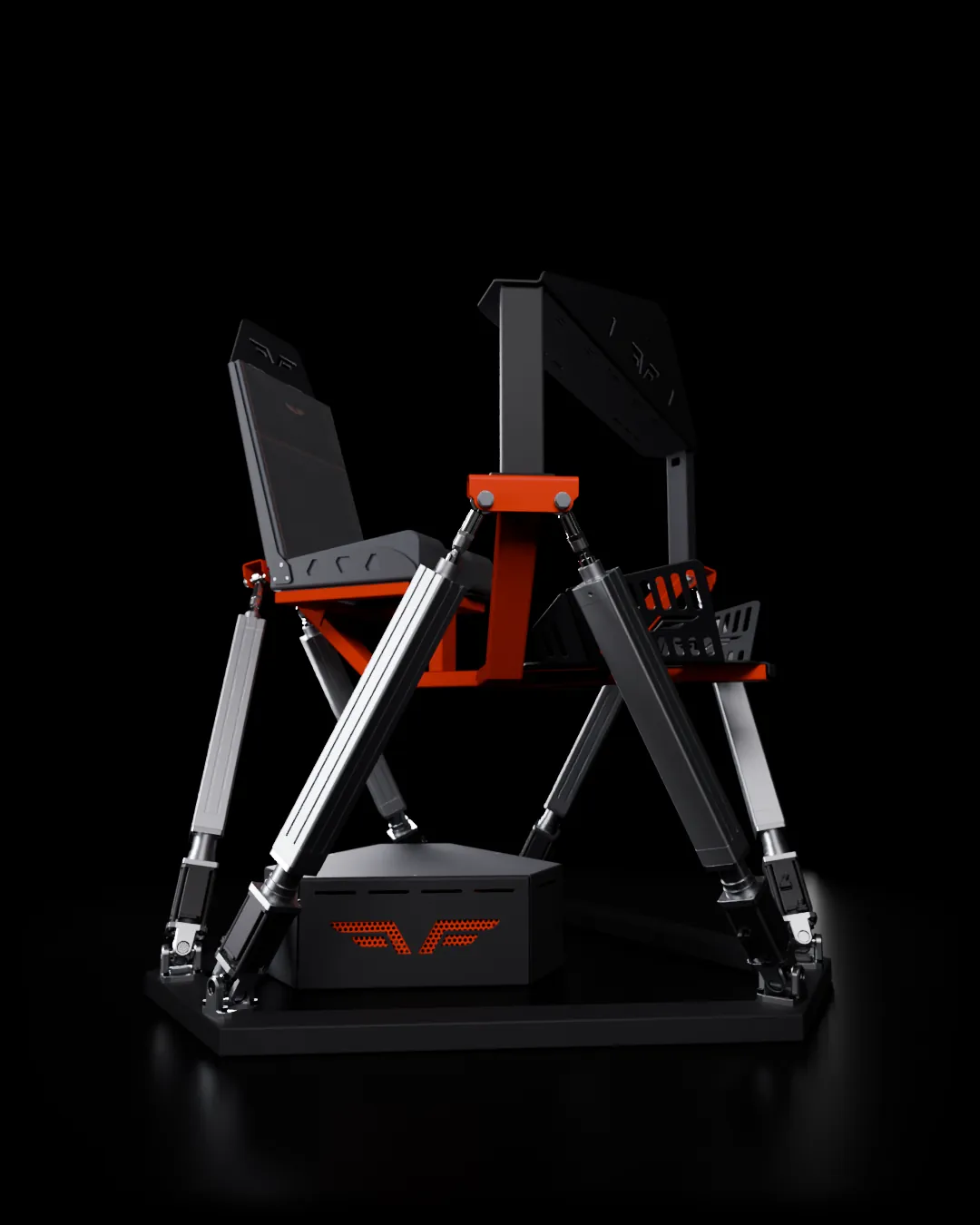
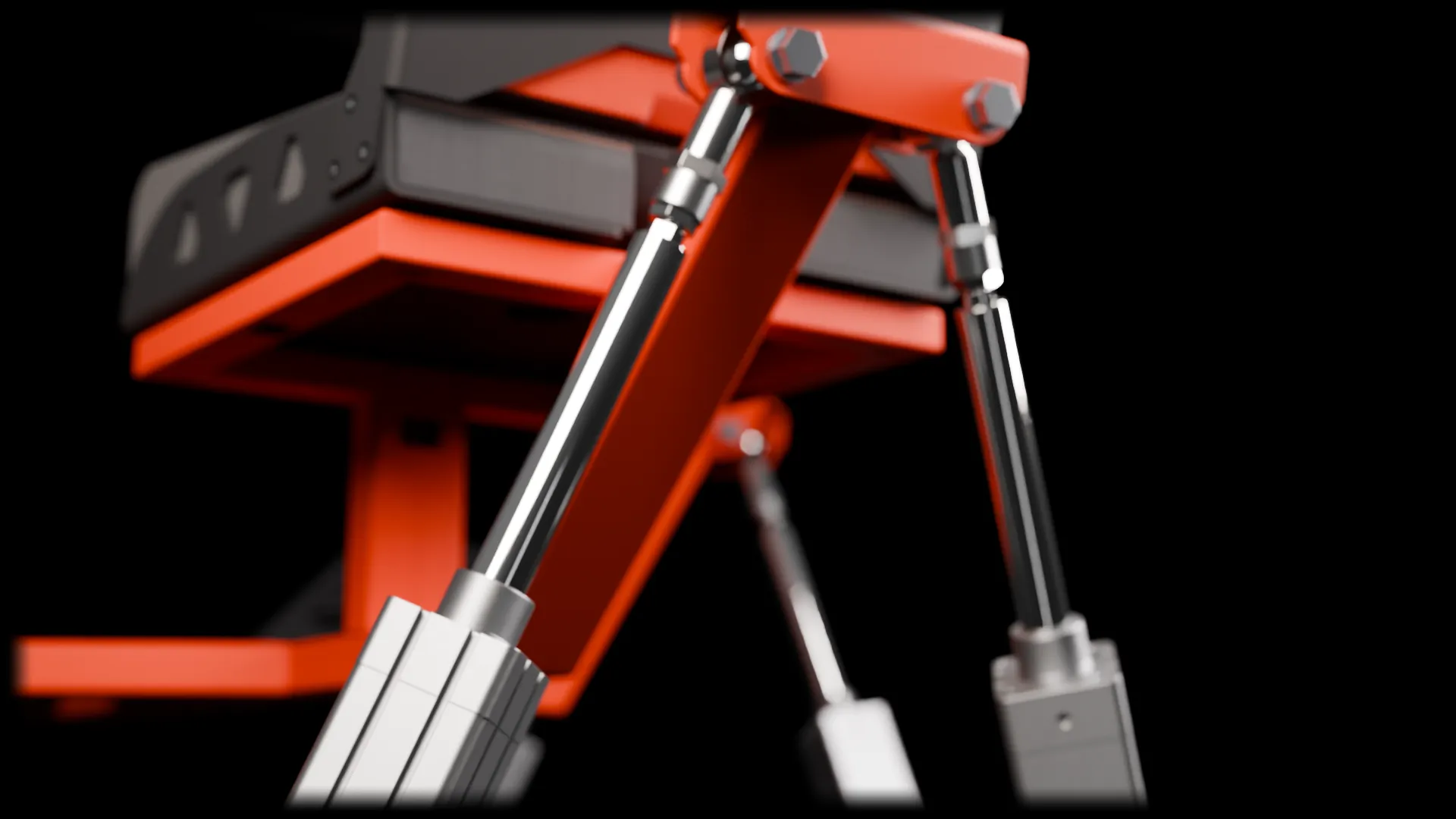
Platform
A full-flight-simulator platform, sized for one pilot.
Six direct-drive actuators carry the VXR-7. In each one the motor turns the ball screw straight: no belts, no gears, no slack. Every actuator's position is updated 1,000 times per second, so the platform moves the way the aircraft does.
How it is built
Each actuator is a high-precision ball screw turned directly by its motor, with up to 400 mm of travel. Together the six give the platform 32° of yaw.
We laser-cut the frame to 0.1 mm. A Stewart platform is only as precise as the geometry its software calculates with.
The center of gravity sits low, in the actuator axis, so the travel moves the platform and not a top-heavy build.
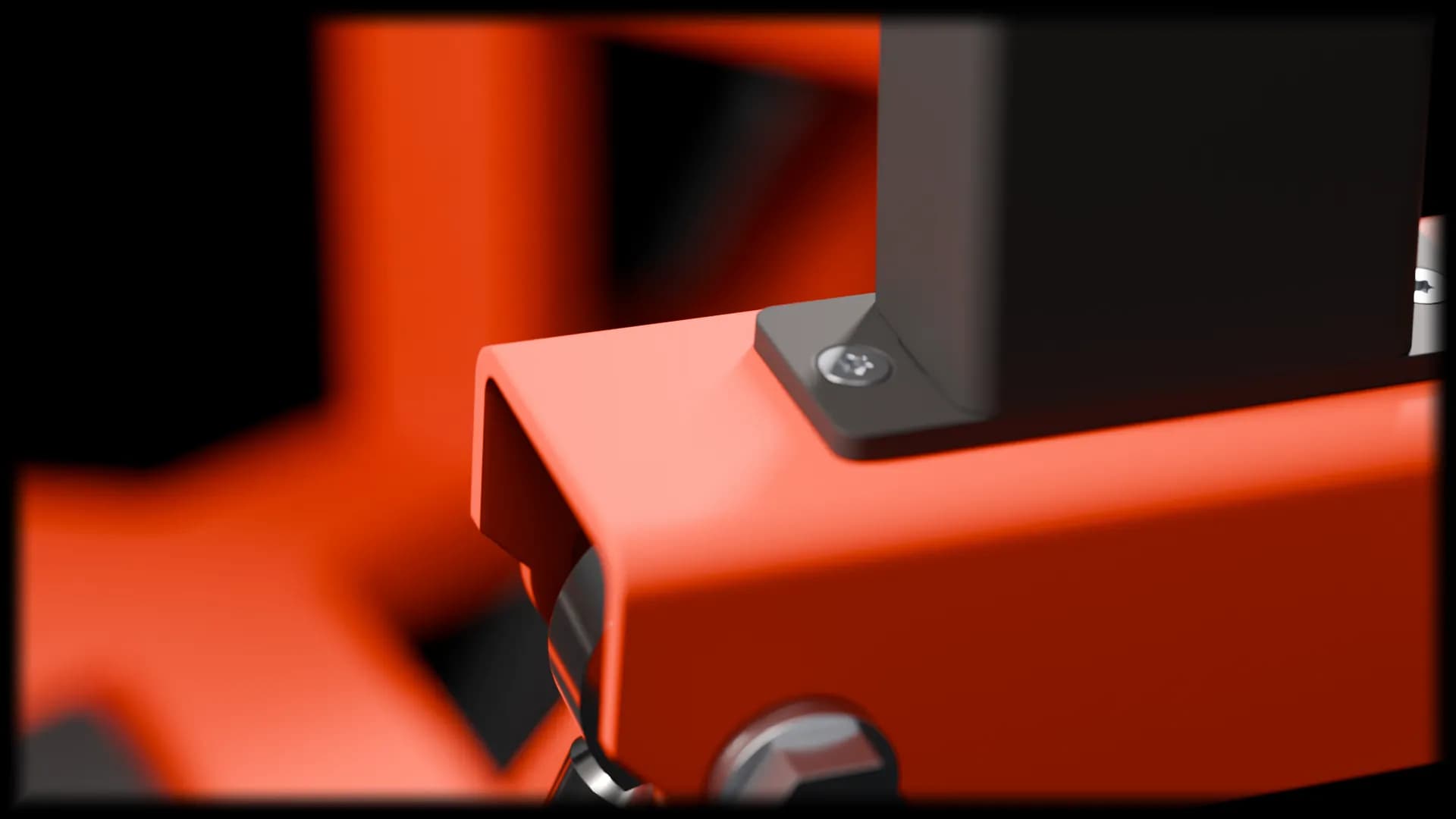
The flight frame is 3 mm steel, the base and mounts 5 mm, welded metal on metal. A hard acceleration around the center of rotation, instant up to 0.9 G, reaches you as the aircraft's own force, not the machine's.
Motion Engine
Motion is not motion.
Off-the-shelf motion software moves a platform. Ours flies it. We wrote our own Motion Engine, so the platform behaves differently on the runway, in a climb or deep in a stall, and feels like the real airplane or helicopter. Each aircraft is calibrated with pilots who fly the real one.
The seat
Built to transmit.
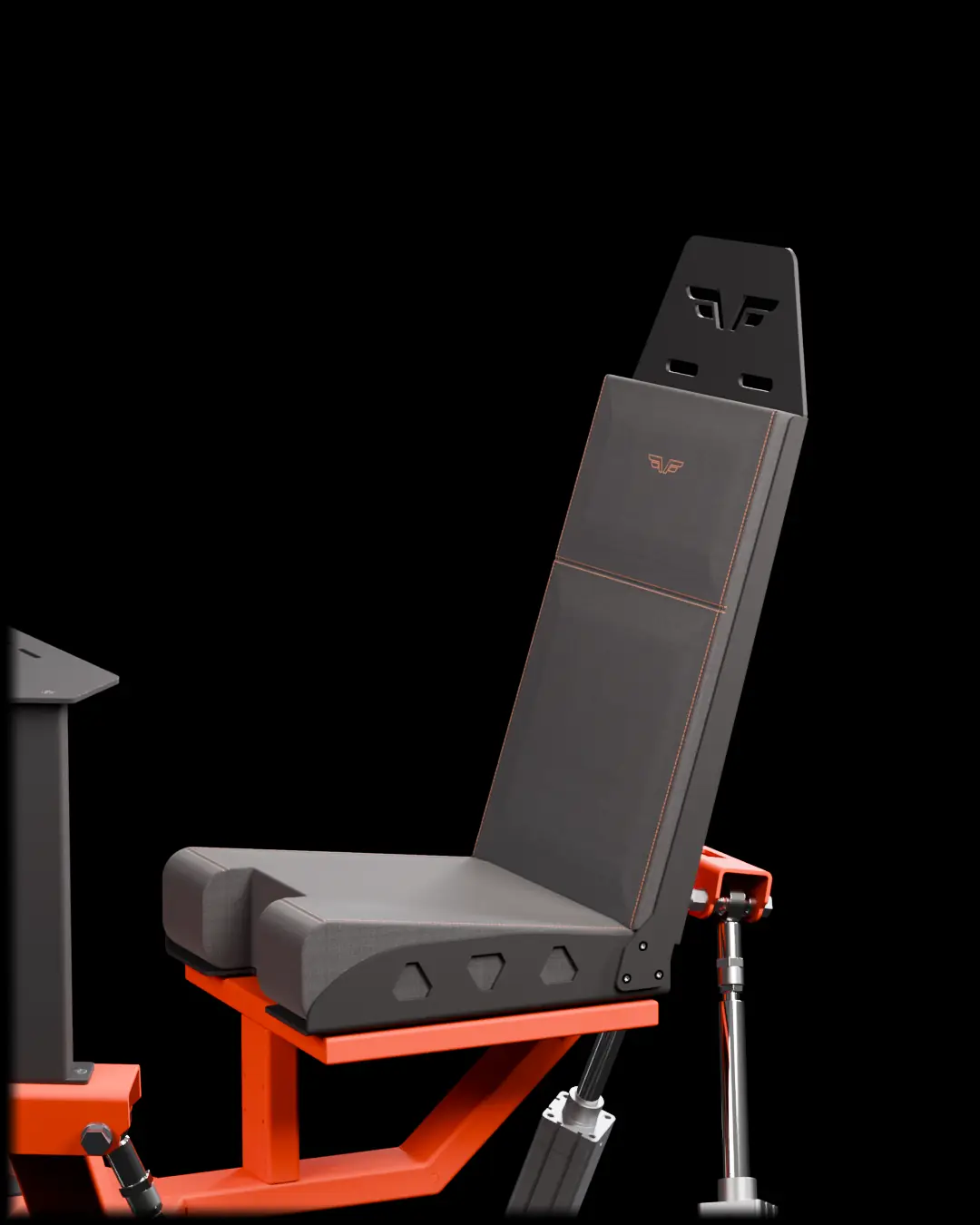
We designed our own seat, because existing seats were losing detail the platform delivers. 5 mm steel, no flex, locked in place. Every movement of the platform, the airflow over the surfaces and the engine vibration reach you through it.
Foam, stitching and seatbelt
Three foam densities, for feel and for comfort over long hours.
Durable materials, double-stitched for stability.
A 4-point seatbelt integrated directly into the frame. The seat adjusts and locks without sliders that wobble.
The Germans call what reaches you through it the “Popometer”, loosely the butt meter. We call it Feel the Sky.
Controls
Each maker's best controls.
You are not locked into one brand. Our Motion Engine drives the force-feedback stick, yoke and pedals each manufacturer builds best and tunes them per aircraft, so your hands feel the aircraft first and the motion behind them agrees. Helicopters fly with the Pro Flight Trainer PUMA: cyclic, collective and pedals.
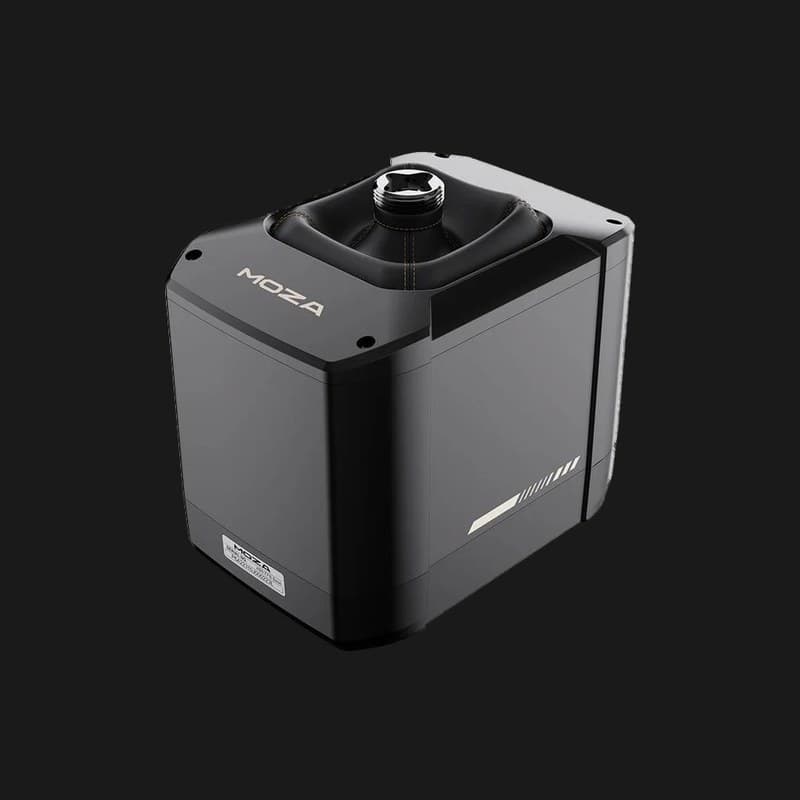
MOZA® AB9
Force-feedback stick base, tuned per aircraft.
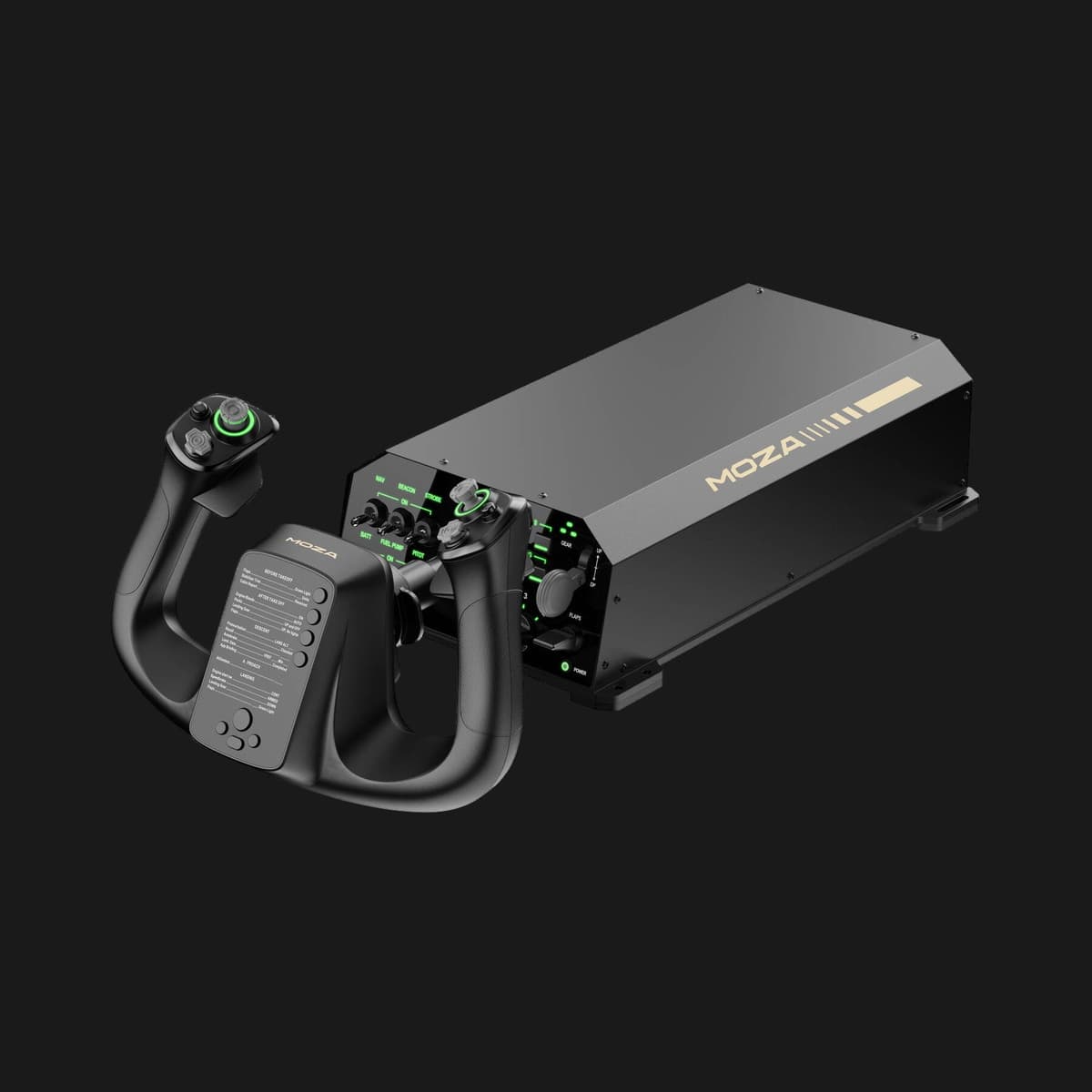
MOZA® AY210
Force-feedback yoke base, tuned per aircraft.
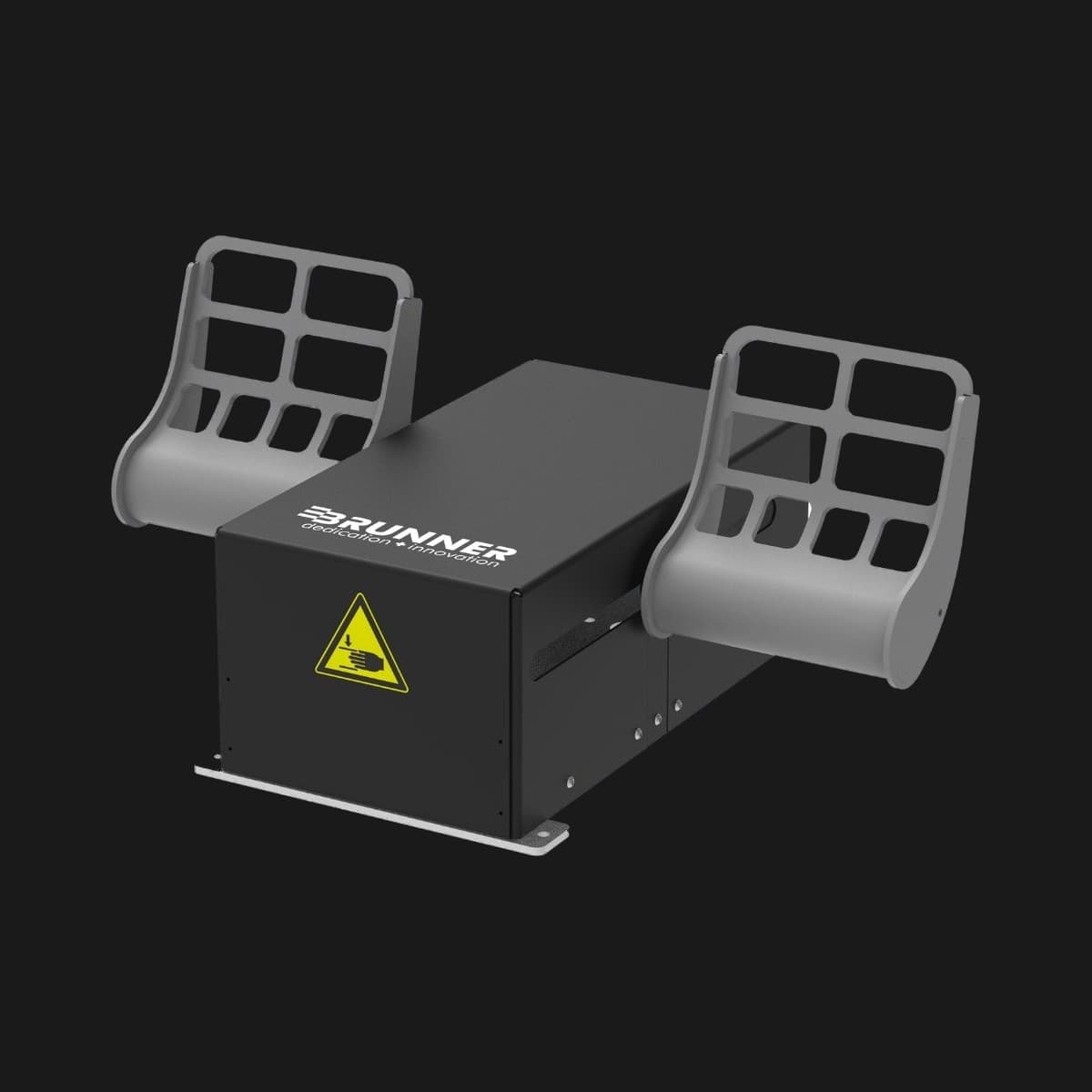
Brunner® FFB-G
Force-feedback rudder pedals.
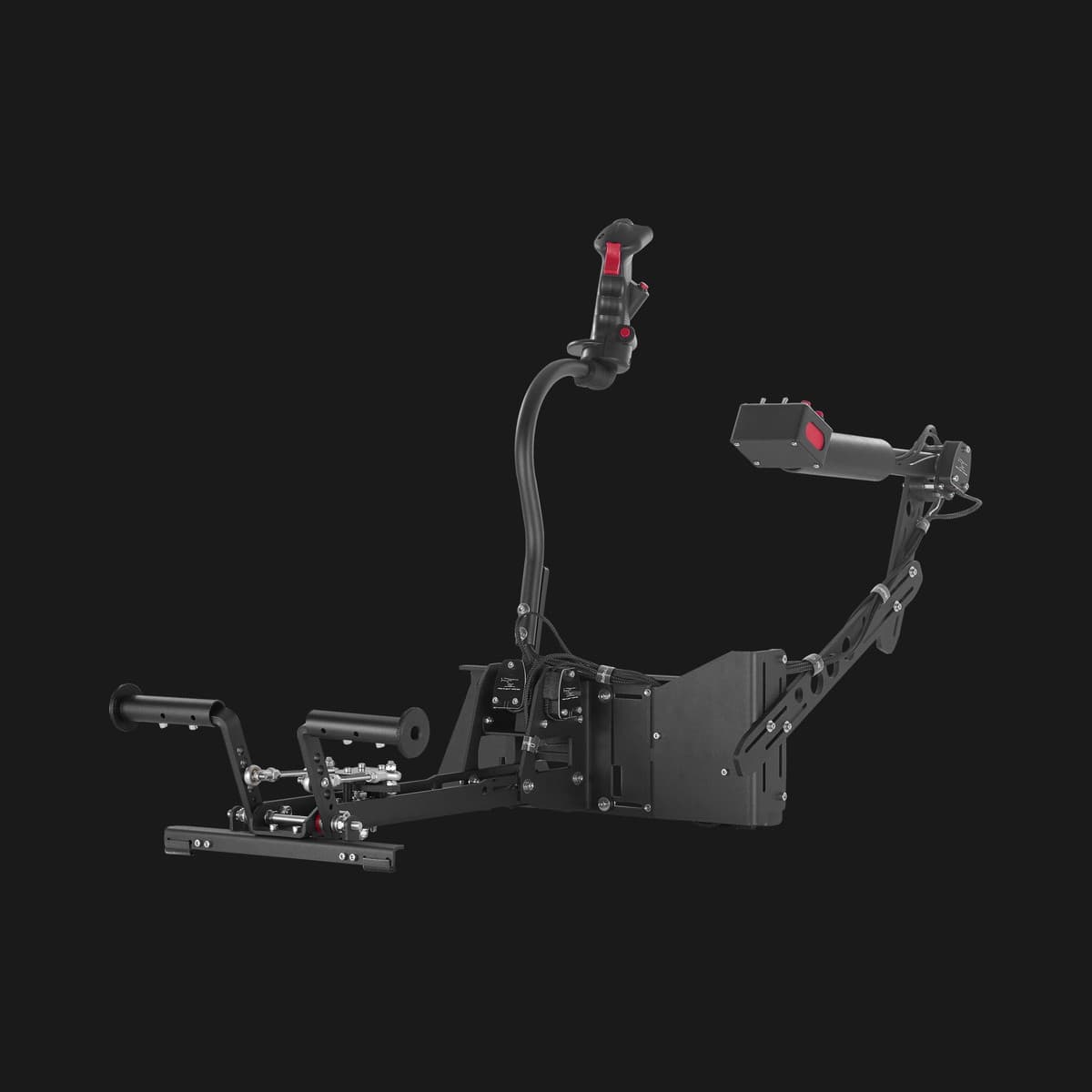
Pro Flight Trainer® PUMA
Helicopter controls: cyclic, collective and pedals.
What each one does
MOZA AB9: for everything flown by stick. Our engine takes it over and re-tunes the force profile per aircraft, sharp for aerobatics. You feel the maneuver instead of reading it.
MOZA AY210: light around touchdown, heavy near the stops. You feel airloads and hydraulics, not servo buzz.
Brunner FFB-G: driven by our Motion Engine, the pedals bring runway vibration and rudder loads up through your feet as true feel.
Pro Flight Trainer PUMA: cyclic, collective and pedals for a single pilot, with control inputs close to real operations.
MOZA®, Brunner® and Pro Flight Trainer® are registered trademarks of their respective owners.
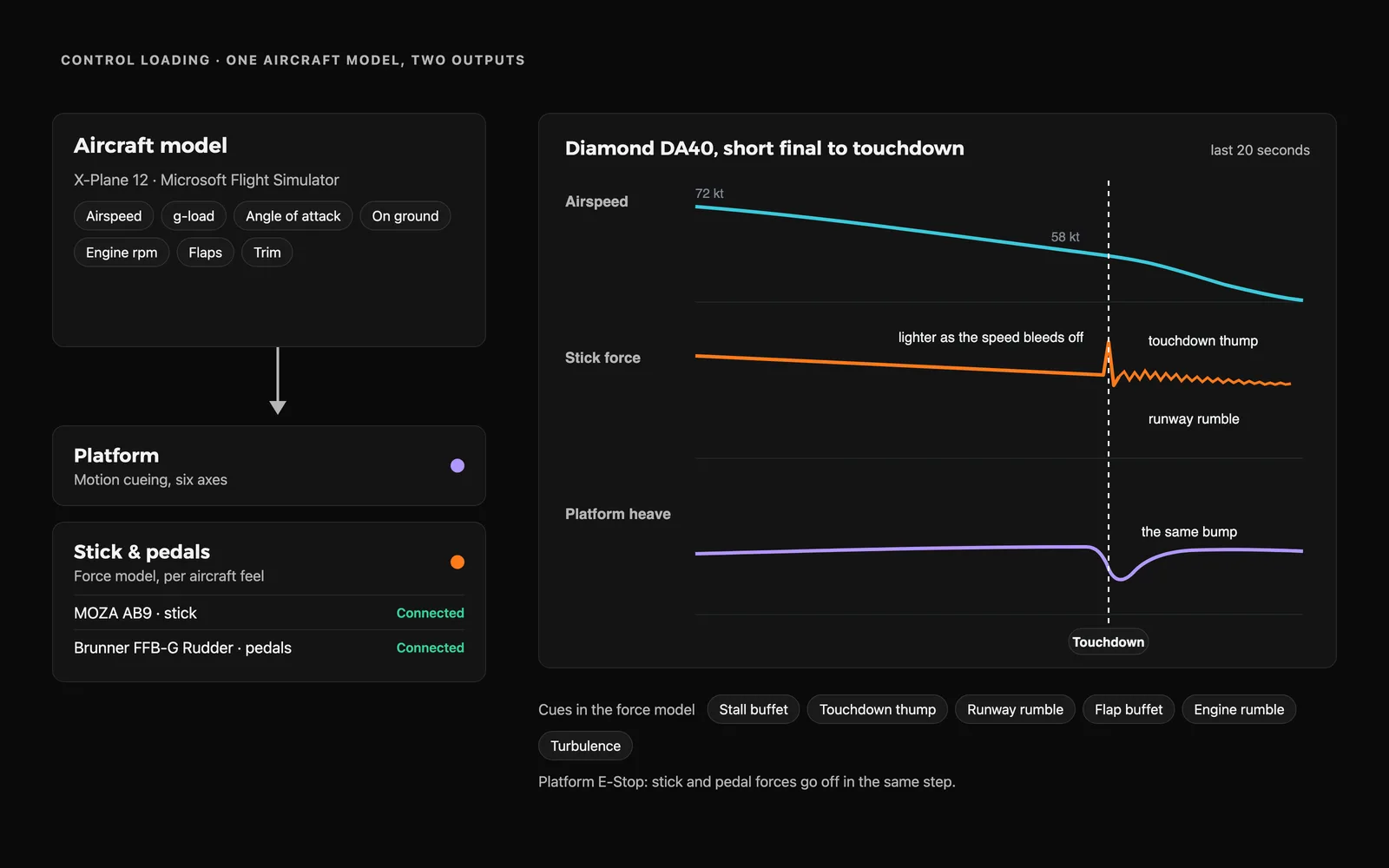
Control loading
The stick and the seat agree.
Stick and pedals are driven by the same aircraft model as the motion, so the two never disagree. The touchdown you feel in the seat also arrives in your hand. Every aircraft has its own feel.
What's included
Everything but the sky.
- The VXR-7 motion platform, assembled and installed
- Steel seat with custom handmade cushions
- Controls configured to your aircraft
- A performance-tuned sim PC and VR headset
- Our Motion Engine with your calibrated aircraft profiles
- Delivery, on-site setup, operator introduction, support and warranty
Practical
Planned with you.
- Certification
- None. The VXR-7 is a proficiency trainer for the procedures, failures and weather you would never risk in the aircraft, as often as you like, all year round.
- Space
- Fits a room, not a hangar. We check your space with you.
- Power and connectivity
- We plan power and network with you before delivery.
- How to get one
- Every VXR-7 is built to order, in your colors and with your logo if you like. Tell us what you fly, and you get a configuration and a price.
Vision
Find your case.
Pilot Owner
Fly your worst day before it happens.
Pilot Student
Arrive at every lesson ready for it.
Flight School Owner
More students, same fleet.
Flight Instructor
Teach more, repeat less.
Helicopter Instructor
Teach them to feel the tilt.
Sailplane Instructor
Cable breaks and one-shot landings, on the ground.
Sailplane Flight School
Protect the gliders, free the tow line.
Warbirds
Stay current without burning airframe hours.
Your VXR-7